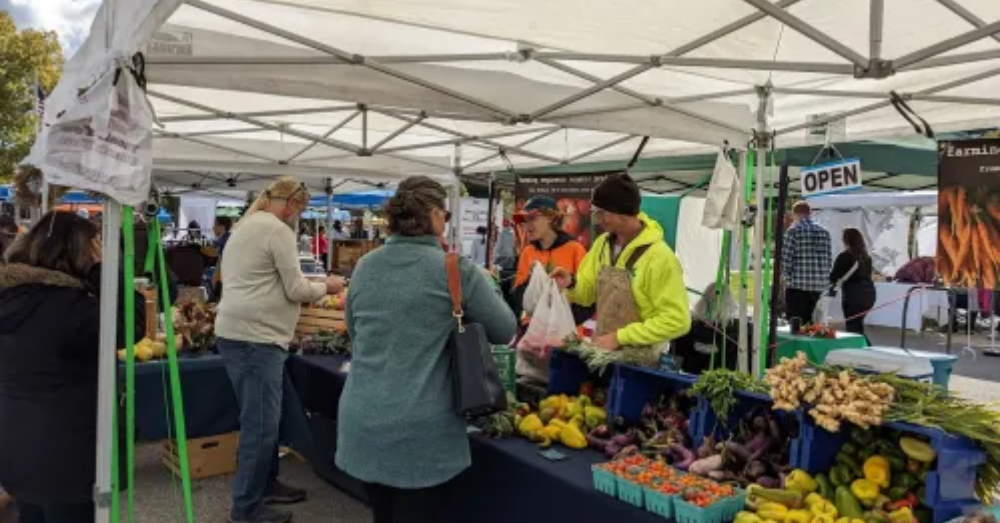
You know what’s funny about small-town farmers’ markets? They make city markets look boring. While urban shoppers fight crowds for overpriced organic kale, towns like Yellow Springs, Ohio, and Traverse City, Michigan, are quietly building food scenes that would make Portland jealous.
- Yellow Springs runs year-round with live music every Saturday and vendors who’ve been friends for decades
- Traverse City keeps it real with growers-only rules and over 6,000 weekly shoppers in a town of 15,000
- Noblesville hosts 80+ vendors every Saturday with yoga classes, kids’ business days, and serious Midwest hospitality
Yellow Springs: The Coolest Farm Town You’ve Never Heard Of
This Ohio college town feels like someone dropped a Vermont village into the Midwest. With just 3,600 residents, Yellow Springs runs a farmers market that most cities would envy. They’ve been at it since the 1980s, starting small and growing into something special.
Here’s what caught my attention: they never close. Spring through fall, you’ll find them outdoors behind the Trail Tavern every Saturday from 8am to noon. When winter hits, they move inside the John Bryan Community Center and keep going from 9 to 11am. Snow, rain, or shine – the market happens.
The vendor list reads like a locavore’s dream. Over 200 varieties of fruits and vegetables, mushrooms, pork, chicken, beef, eggs, honey, maple syrup, jams, locally roasted coffee, and fresh flowers. Plus handmade soaps and body care products that actually work.
What makes it work? The music helps – live performers play while you shop. But really, it’s the relationships. Vendors know their customers’ kids by name. Regular shoppers plan their weekends around market day. It feels less like shopping and more like a weekly neighborhood party.
Traverse City: Where Cherry Country Gets Serious
Drive north to Michigan’s cherry capital and you’ll find the Sara Hardy Downtown Farmers Market, named after a local philanthropist who understood community building. This market started with fewer than ten vendors and grew into one of Michigan’s top three largest markets.
The “growers only” rule sets Traverse City apart. Every vendor grows, raises, or makes what they sell. No middlemen, no resellers. When you buy cherries, you’re talking to the farmer who picked them. When you grab that sourdough loaf, you’re chatting with the baker who stayed up all night making it.
The numbers tell you everything: 3,000+ shoppers on regular Saturdays, doubling when the weather cooperates. They run from early May through October on Saturdays (7:30am-12pm) and add Wednesdays (8am-12pm) from June through October. During the National Cherry Festival, they move to the Old Town Parking Garage to handle the crowds.
Plus, they’ve got the only year-round market in the area at The Village at Grand Traverse Commons. Mondays outdoors when it’s warm, Saturdays indoors when it’s cold. Smart planning for a place that sees real winter.
Noblesville: Midwest Nice Meets Market Magic
Head to central Indiana and you’ll discover why Noblesville, Indiana, takes pride in running Hamilton County’s oldest and largest farmers market. Every Saturday from May through October, 80+ vendors spread across Federal Hill Commons in downtown, creating what locals call “the heartbeat of our community.”
This market thinks bigger than produce. They host live music, morning yoga classes (8-9am), and special Kids Days where young entrepreneurs can set up stands and learn business basics. The wellness angle works – kickboxing classes next to the tomato stands just makes sense somehow.
The vendor variety impresses visitors from bigger cities. Fresh fruits, vegetables, meats, plants, herbs, flowers, honey, spices, wine, jams, jellies, salsas, baked goods, soaps, jewelry, artwork, crafts, and pet products. The food court offers breakfast and lunch, with tables for people who want to eat while listening to live music.
Location matters here too. Federal Hill Commons sits in downtown Noblesville, so market day brings foot traffic to surrounding shops and restaurants. Smart city planning that benefits everyone.
The Real Economic Story
Here’s where these small markets get interesting from a business perspective. Research shows that growers selling locally create 13 full-time jobs per $1 million in revenue, compared to just 3 jobs for farms selling wholesale. Why? Local sellers buy 89% of their supplies from local businesses, while wholesale operations buy only 45% locally.
Translation: your farmers market dollars stick around. That money you spend on Saturday morning eggs might end up paying for feed at the local grain elevator, equipment repair at the hometown mechanic, or supplies at the family-owned hardware store.
A Pennsylvania study found that 70% of farmers market customers also shop at nearby downtown businesses, spending up to $26,000 extra per week. In small towns, that kind of economic boost makes a real difference.
What Makes Small Markets Different
Walk through Yellow Springs, Traverse City, or Noblesville on market day, and you’ll notice something missing from big city markets: stress. Nobody’s rushing. Kids run around safely. Dogs get treats. Vendors take time to explain how they grow things or suggest recipes.
Small markets adapt faster, too. During COVID-19, these markets figured out drive-through service and outdoor spacing while big operations struggled with logistics. They stayed open, supported farmers, and kept communities fed when people avoided grocery stores.
The secret sauce? Scale. When your market serves 15,000 people instead of 1.5 million, vendors can actually know their customers. Farmers remember who bought the last of the sweet corn. Bakers save special items for regulars. It’s retail the way it used to be everywhere.
Planning Your Visit
Timing matters if you want the full experience. Yellow Springs runs year-round, so you can experience that community feel even in February. Traverse City peaks during cherry season in late June and July, but fall apple harvest creates equally impressive displays. Noblesville shines during Indiana sweet corn season in August – trust me on this one.
Each market reflects its town’s personality. Yellow Springs feels artistic and slightly bohemian. Traverse City takes serious pride in agricultural quality. Noblesville radiates that genuine Midwest friendliness where vendors ask about your family.
These markets prove something important: size doesn’t equal quality. While city markets compete on variety and scale, small-town markets win on relationships and community connection. When your tomato seller knows your name and your honey vendor went to high school with your neighbor, you’re getting something no supermarket can offer.
Sometimes the biggest impact comes in the smallest packages. These three markets get that better than anyone.