
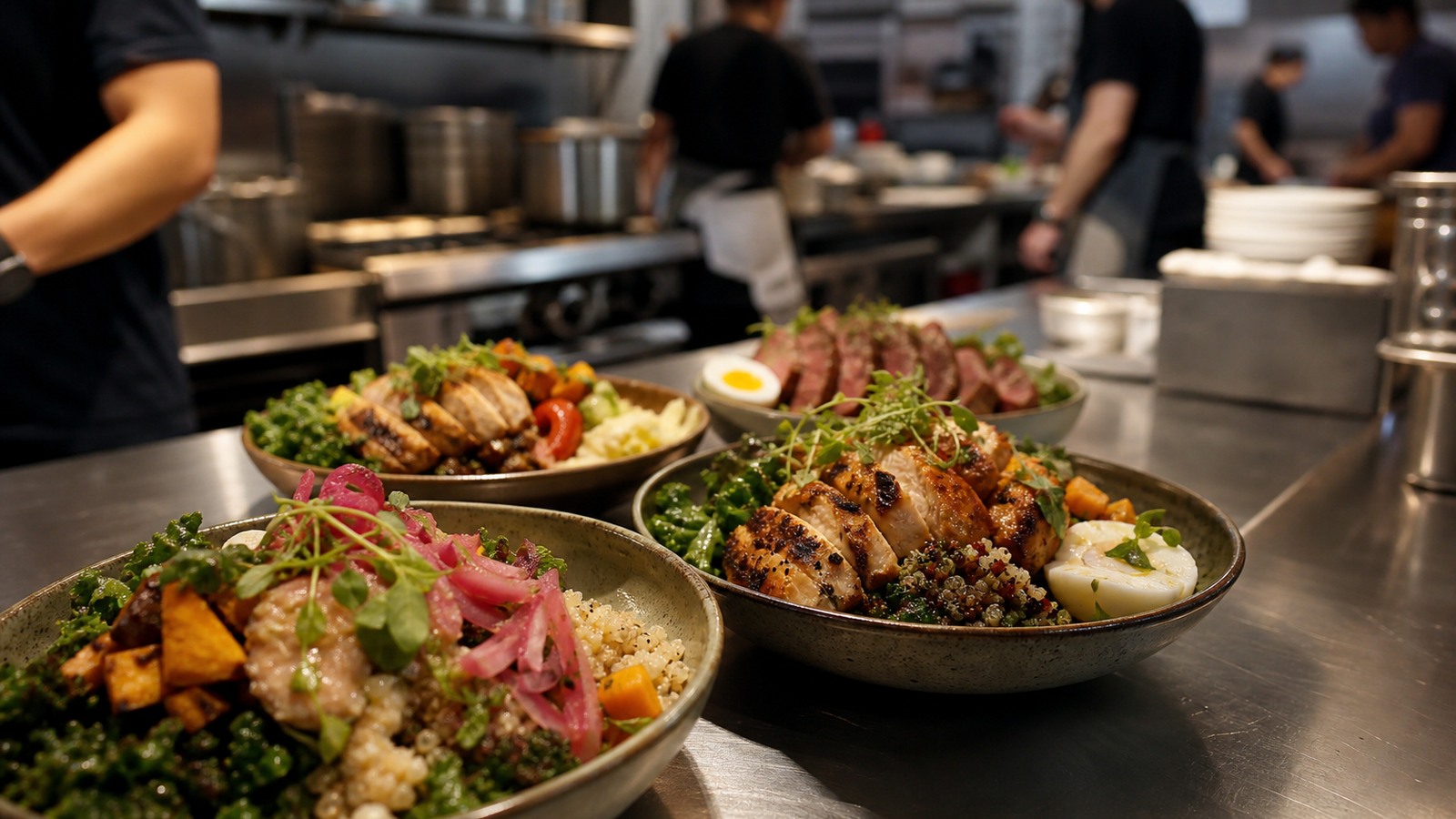
A viral eating trend focused on high protein intake is changing how some diners in Los Angeles order, pushing demand for chicken, steak and other proteins higher across neighborhood restaurants while raising questions about whether higher checks actually translate into stronger profits.
- Demand for protein add-ons has climbed sharply at some Los Angeles counter-service spots, with one reporting protein and modifier sales up 300 to 400 percent.
- Higher customer spending has not produced higher profits, as restaurants absorb steeper supply chain costs for chicken and steak.
- Federal guidance, GLP-1 medication use and social media influence are among the forces cited for the surge in protein-focused eating.
What Proteinmaxxing Looks Like on the Plate
The trend promotes higher protein consumption with goals that include boosting metabolism, reducing appetite and building muscle. At counter-service restaurants in and around Los Angeles, that appetite shows up in bowls piled with extra chicken, steak or eggs, often ordered as double or triple add-ons. Some regulars describe aiming for well over 100 grams of protein a day, using a single bowl with an added chicken breast and egg to reach a large share of that goal. Social media has amplified the look, popularizing loaded cutting boards known as steakboards that stack strips of steak, chicken, fried eggs and other high-protein foods. National chains have responded as well, with one fast-casual brand briefly offering a bowl marketed at roughly 106 grams of protein and another rolling out a dedicated high-protein menu.
Why Bigger Checks Do Not Mean Bigger Margins
Customers are willing to pay for extra protein, yet restaurant operators report that the added revenue rarely reaches the bottom line. One East Hollywood spot says sales of proteins and modifiers have risen 300 to 400 percent as diners swap standard portions for full breasts of chicken. Even so, its owners say they have not raised protein prices since opening, while paying about 15 percent more for chicken and 25 percent more for steak since 2024. Menu ranges reflect the premium placed on protein, with bowls at some restaurants priced from about 12.50 to 36 dollars and protein add-ons running from a few dollars to the high teens. Owners also cite broader supply chain pressures, including higher input costs for farmers, as a reason protein remains expensive to serve. Smaller operators note that they lack the buying power of large chains when negotiating with distributors.
The Nutrition Debate Behind the Trend
Federal guidance has shifted in a way that aligns with the moment. For an adult weighing 150 pounds, this year’s recommendation rose from about 55 grams to roughly 80–110 grams of protein per day, and health officials framed the change as an end to restrictions on protein. Analysts also point to GLP-1 weight-loss medications, which can suppress appetite; a 2026 Gallup poll found that 11 percent of US adults reported using them, up from 3 percent in 2024. Still, the American Medical Association and some nutrition experts caution that very high protein intake can contribute to digestive problems, weight gain, gout and other issues. Protein-forward eating is not new, echoing earlier waves such as Atkins, paleo and keto.
Why the Economics Travel
The business question is not limited to Los Angeles. A restaurant owner in Avon, Indiana seeing more requests for extra chicken, steak, or protein add-ons would face the same calculation: a larger check helps only if it grows faster than ingredient and labor costs. The trend may travel, but the margin still depends on local prices and ordering habits.

1 thought on “Proteinmaxxing Is Reshaping Restaurant Menus and Margins”