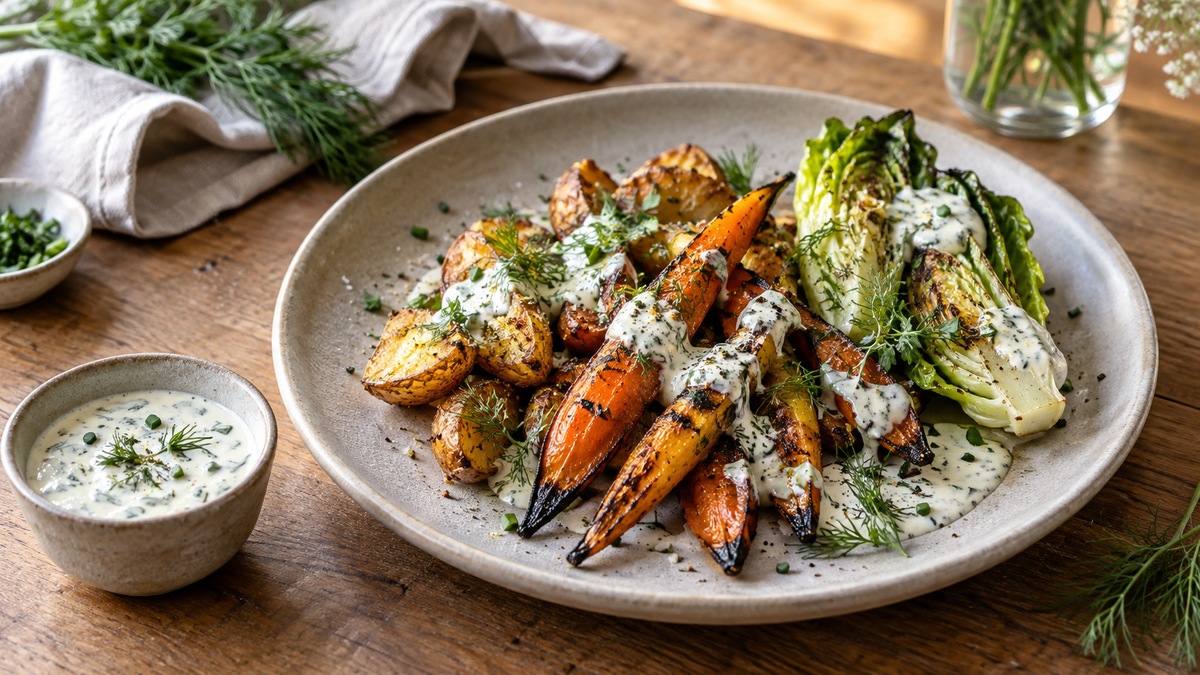
Somewhere between the salad bar and the fried chicken basket, a creamy buttermilk sauce quietly grew up. It’s no longer the thing you pour without thinking. Chefs are treating it like a star, with versions made for far more than a salad.
- Ranch traces back to Steve Henson and California’s Hidden Valley Ranch, built on buttermilk, mayo, and herbs.
- Restaurants from Los Angeles to Portland, Maine now serve personal, culturally specific versions of the sauce.
- A post-lockdown love of comfort food and a viral World Cup moment pushed ranch back into the spotlight.
A Humble Start With Big Ambitions
The story starts with a contractor named Steve Henson, who mixed buttermilk, mayonnaise, and a handful of herbs and seasonings to give his workers something better than a dry salad. The sauce took off. He eventually served it at Cold Spring Tavern, an old 1800s stagecoach stop tucked into the Santa Ynez mountains, where you can still order it today. Those early DIY packets, dreamed up at the real Hidden Valley Ranch, were sold as a party dip. That detail feels almost prophetic now, because pleasing a crowd turned out to be ranch’s whole personality.
For decades it stayed steady. Italian dressing gave it a little competition in the 1990s, but the buttermilk classic never really lost ground. Then something shifted after the pandemic. According to consumer research firm Mintel, people leaned harder into condiments during lockdowns, and that habit stuck around long after the world reopened. Shelf-stable, endlessly dippable, and comforting, ranch was built for the moment.
Chefs Are Rewriting the Recipe
For cooks in fine-dining kitchens and casual neighborhood restaurants alike, the ordinary bottle becomes a starting point for something more personal. At Lapaba, a Korean Italian spot in Los Angeles, chef McKenna Lelah serves a yuzu kosho ranch alongside lollipopped fried chicken wings. It keeps the classic dill note but swaps in creme fraiche for tang, yuzu juice for acid, and yuzu kosho for a citrusy heat. Lelah almost cut it from the menu after some doubts during a friends and family night. She kept it. Fans are glad she did. For her, ranch isn’t a side thought at all. She treats it as the main event, using the food mostly as a delivery vehicle to the sauce.
She’s got plenty of company. At Bistro Amasa in Santa Barbara, chef Julian Martinez leans into Y2K snack nostalgia with a Cool Ranch Dorito-inspired crudo, layering delicate hamachi over buttermilk-lime creme with garlic oil, masa, cilantro, and crunchy serrano. Up in Portland, Maine, the Thai restaurant Crispy Gai offers Nam Jim Seafood Ranch, a creamy buttermilk base punched up with garlic, green chile, lime, fish sauce, and cilantro.
The Bay Area has been especially busy. San Francisco seafood spot Popi’s Oysterette pours a house ranch built on dill, chives, rice vinegar, and black pepper, while Prubechu, the city’s only Chamorro restaurant, runs a wasabi ranch. Each one carries a fingerprint, some cultural, some personal, all rooted in that familiar creamy foundation.
Comfort Food’s Big Return
Timing helped. Diners have been chasing easy comfort, from rotisserie birds to chicken tenders, all of which practically demand a dip. One of New York’s hottest reservations this summer, Cleo Downtown, centers its menu on rotisserie chicken and even serves a labneh ranch among its Lebanese-inspired plates. When the fried and roasted chicken craze meets a sauce this friendly, the pairing basically markets itself.
Then came the 2026 FIFA World Cup, which handed the condiment a fresh international audience. A wave of clips celebrating American food quirks made the rounds, including the now-famous suitcases stuffed with ranch. Some of that buzz came from older videos being recirculated rather than a spontaneous tourist frenzy, so the clips alone do not measure a new wave of enthusiasm. Even so, the noise was loud enough that headlines cheerfully declared ranch had won the summer.
Why We Still Argue About It
None of this has settled the debate. Ranch remains a favorite target for food snobs. Lelah has a gentler read. She grew up with certain condiments simply living on the table every night, and she thinks nostalgia matters as much as invention. There’s a strange shame attached to loving something so easy, yet ease is exactly the point. If a dish resonates with the people eating it, that’s the whole reason a restaurant exists.
So the next time you spot a house-made ranch dressing on a menu with an unexpected twist, order it. That little cup might be the most thoughtful thing on the plate.