
The chocolate world spent the last couple of years chasing whatever went viral next, from gooey Dubai bars to flavor mashups built for the camera. But the shift worth paying attention to has nothing to do with a new gimmick. It’s quieter, and it comes down to one question: what’s actually in the bar you’re eating?
- Shoppers are reading labels and asking where cocoa, fruit, and nuts really come from.
- Small-batch chocolatiers win on fresh, real ingredients instead of fillers and artificial flavors.
- As cocoa prices settle, demand for honest, high-quality chocolate is climbing.
Novelty Had Its Moment
Dubai chocolate blew up at the end of 2023 after an influencer’s taste-test video spread everywhere. It was rich, it looked incredible, and it got people talking. Ever since, the food world has been guessing at the next big craze. The honest answer is that the excitement is drifting away from novelty for its own sake and toward chocolate that simply tastes better because it’s made better.
Nicole Patel, founder of Delysia Chocolatier and named a Six-Star Grand Master by the International Chocolate Salon, has watched this play out up close. She points out that Dubai chocolate did something useful beyond the hype. It made people curious about what separates a good bar from a truly memorable one. That curiosity is now the real story.
Shoppers Are Reading the Fine Print
Here’s what changed. As big commercial brands hunted for ways to trim costs, more products showed up with artificial flavors, cheap fillers, and lower-grade ingredients. Customers noticed. Plenty of longtime fans started saying out loud that their favorite bars didn’t taste the way they used to.
Climate pressure made things worse for a stretch. Cocoa shortages, especially across major growing regions, pushed prices up and squeezed quality at some well-known labels. Now that prices are steadying, people aren’t rushing back to the cheapest option. They want the good stuff, and they’re willing to look for it. As Patel describes it, consumers have become genuinely ingredient-conscious. They read labels, ask questions, and reach for products that feel authentic.
Small Makers Were Already Doing This
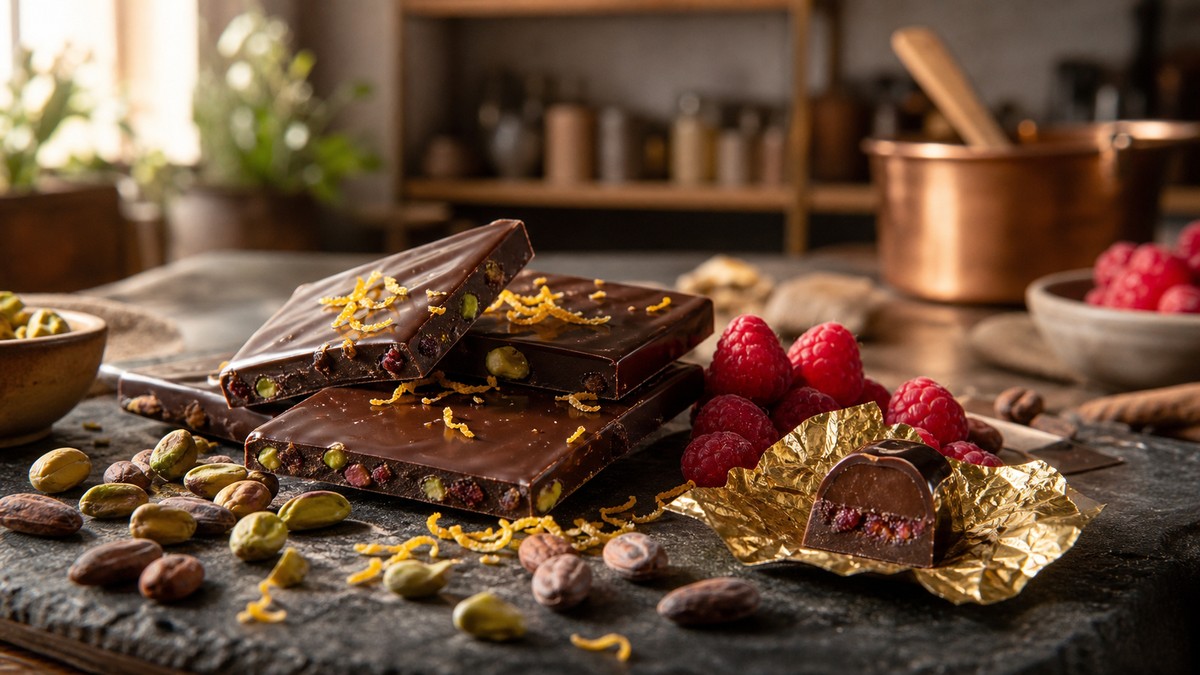
The makers built for this moment aren’t the giant candy companies. Think about a mass-market bar for a second. It often carries only a small percentage of actual cacao, padded out with sugar, milk, and emulsifiers. A skilled small-batch chocolatier works the opposite way. Every ingredient earns its place.
Patel puts it simply. When a chocolatier uses real citrus zest instead of artificial flavoring, or freshly roasted pistachios instead of processed inclusions, you can taste it. The chocolate comes out more balanced and layered, and it sticks with you. Her advice for finding the real deal is smart and easy to follow. Seek out makers who can tell you exactly where their ingredients came from, and who keep experimenting with new flavors and seasonal confections.
You don’t need a passport or a big city to find these people. Craft chocolate has quietly taken root in small towns all over the country, where a single shop treats each piece as something handmade rather than a quick sugar hit. A traveler passing through a place like Madison, IN might stumble onto exactly that kind of maker, the sort of shop where each piece is worked by hand and every step clearly gets real care. Bean-to-bar makers in cities from Chennai to the American Midwest are saying the same thing right now, even with cocoa costs up, cutting corners isn’t an option.
What Real Chocolate Tastes Like
Spending a little more starts to make sense once you understand what you’re paying for. High-quality artisan chocolate is the product of experimentation, transparency, and fresh premium ingredients. That’s the whole pitch, and it holds up on the tongue. Patel’s own shop has leaned on premium cacao and real fruits, nuts, herbs, and spices for nearly 20 years, because those ingredients create flavors that come across as more vibrant and balanced.
It’s worth noting the industry is also testing cocoa-free alternatives to hedge against volatile supply, and some large suppliers are betting on them. That’s a different conversation about resilience and scale. For anyone who just wants a better bar today, the path is clear.
How to Shop Smarter for Your Next Bar
Next time you’re picking out chocolate, flip the package over. Look for a short, readable ingredient list and a maker who’s proud to name their sources. Skip the bars built to trend and choose the ones built to taste good. The 2026 chocolate story isn’t a flavor you’ll see once and forget. It’s a return to craftsmanship, and the reward is a piece of chocolate you’ll actually remember.
1 thought on “Why the Best Chocolate Right Now Starts With What’s Actually Inside”