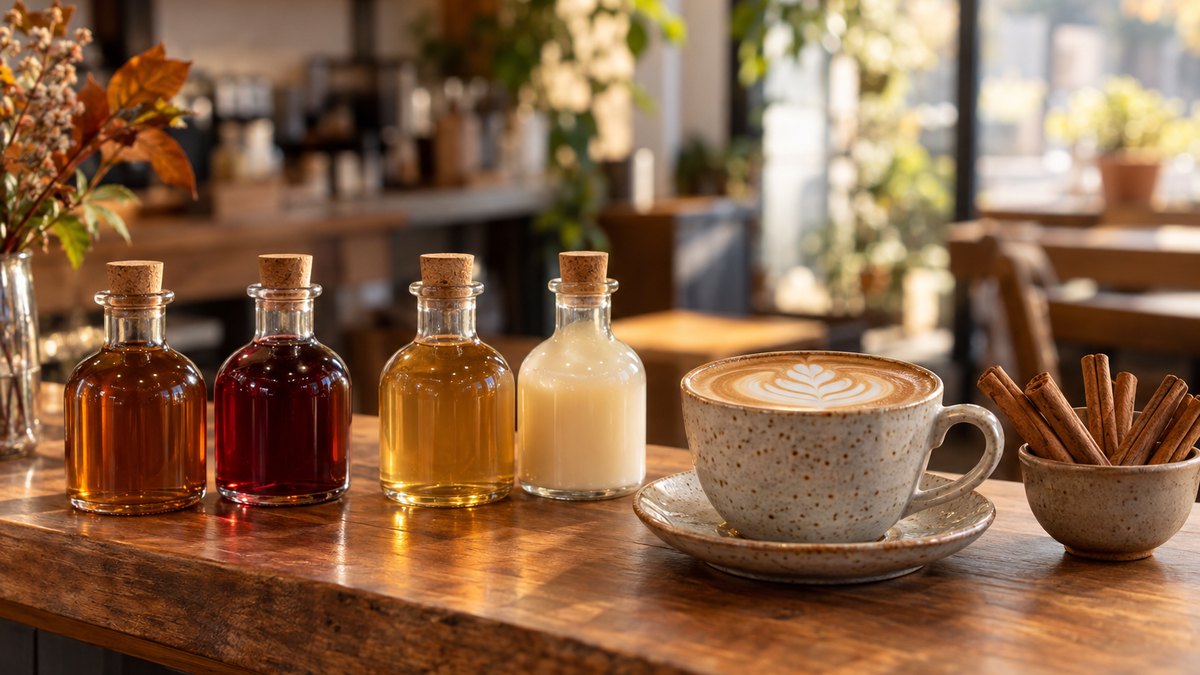
Some customers walk into a cafe, see three rows of bright flavor bottles behind the counter, and turn right around. Premade syrups have picked up a bad reputation online. House-made versions have become the sign that a shop cares about what goes in your cup.
- Social media posts mocking walls of Torani and Monin bottles have turned bottled syrup into a red flag for some coffee drinkers.
- Independent shops are making their own flavors from scratch, from roasted squash pumpkin spice to maple rosemary.
- Some owners say the backlash is partly marketing, and it can be hard on small shops that still use a few bottles.
How a Syrup Bottle Became a Red Flag
One TikTok video with more than 82,000 likes zooms in on a Pennsylvania coffee shop’s shelves of Torani flavors like blueberry, brown-sugar cinnamon, English toffee, and salted caramel. The caption predicts a bad latte. Other people say they’d leave a cafe on the spot if they saw those bottles.
Torani takes most of the heat as the biggest name, though Monin gets its share too, with Reddit baristas arguing over claims that it tastes like chemicals. If a specialty shop charges $8 plus tip for a latte, this crowd doesn’t want the flavor coming from the same bottle a chain uses.
Shops That Swore Off Syrups Now Make Their Own
Carrie and Dennis Medina, who both got their start at Sightglass Coffee, planned Room Service in Ventura, California, as a purist shop with eight pour-over options, single-origin beans from their own roastery, and no syrups. That plan didn’t survive the first week, when every customer asked for flavored drinks.
Today Room Service keeps 10 to 12 house-made syrups and six cream tops going at once, including a cinnamon roll latte topped with an actual cinnamon roll. A full-time prep person works only on the in-house extras. Their pumpkin spice latte starts with kabocha squash, which is roasted, blended with spices, and cooked into syrup over two days. Dennis says a shop that doesn’t at least make basics like vanilla is falling behind.
Michael Smith had the same surprise at Trust Coffee Co. in Bay Village, Ohio, which he opened in 2025. He expected a pour-over crowd, but customers wanted seasonal syrups like maple rosemary, caramelized banana, and strawberry rhubarb. Two full-time pastry chefs now make them, and each new flavor posted on social media sends the line out the door for a week.
The Rise of the Maximalist Latte
This fits a bigger food trend the New York Times has called hyperflavor, where familiar foods get bold, layered flavors. Coffee is following along, with sweet drinks built more like a pastry chef’s dessert or a bartender’s cocktail.
Coffee drinkers in and around Lexington, KY, can find an example close to home. In Midway, a new coffee shop and bourbon bar called Serendipity offers seven house-made syrups you can add to any drink for $1.
Some shops are even sharing the work. Minnesota’s Little Joy, famous for detailed DIY videos of its signature drinks, now sells other shop owners a membership with commercial-scale recipes and training videos.
Not Everyone Is Cheering
Sabrina Kaylor opened the first Bizarre Coffee in Canton, Georgia, in 2020 using bottled syrups, which gave her team time to learn the basics. After COVID, she noticed people taking more pride in scratch-made food. Her shop became known for blueberry, banana, and guava lattes, and customers now ask constantly about sourcing.
Today 90 percent of Bizarre’s drinks use house-made syrups, though one best seller still uses bottled, since making everything by hand would take a lot of labor. Kaylor thinks much of the house-made talk is marketing and sees the anti-Torani memes as consumer bandwagoning that can discourage small owners.
Underneath the memes is a fight between small businesses and big ones, with a bottle of syrup serving as an easy symbol of growing wariness toward corporations and private equity in food and drink.
Ask About the Syrup Before You Order
A shelf full of brand-name bottles doesn’t guarantee a bad latte, and a house-made label doesn’t guarantee a great one. Still, asking where the syrup comes from is a quick way to learn how a shop thinks about flavor. If they make it in-house, try the seasonal special. If they use bottles, order something simple and judge the coffee itself.