Walk into almost any restaurant kitchen and you’ll find stainless steel pans doing the heavy lifting. Home cooks are catching on too. After years of nonstick ads crowding social feeds, shiny steel is having a real moment. And it’s far less fussy than its reputation suggests once you learn how it likes to be heated and cleaned.
- Chefs rely on stainless steel because it gets very hot, heats evenly and makes a good sear easy.
- A properly preheated pan with a little oil can behave a lot like nonstick, thanks to the Leidenfrost effect.
- Letting the pan cool before washing and drying it with a microfiber cloth helps prevent water spots.
Why Pros Trust Steel on the Line
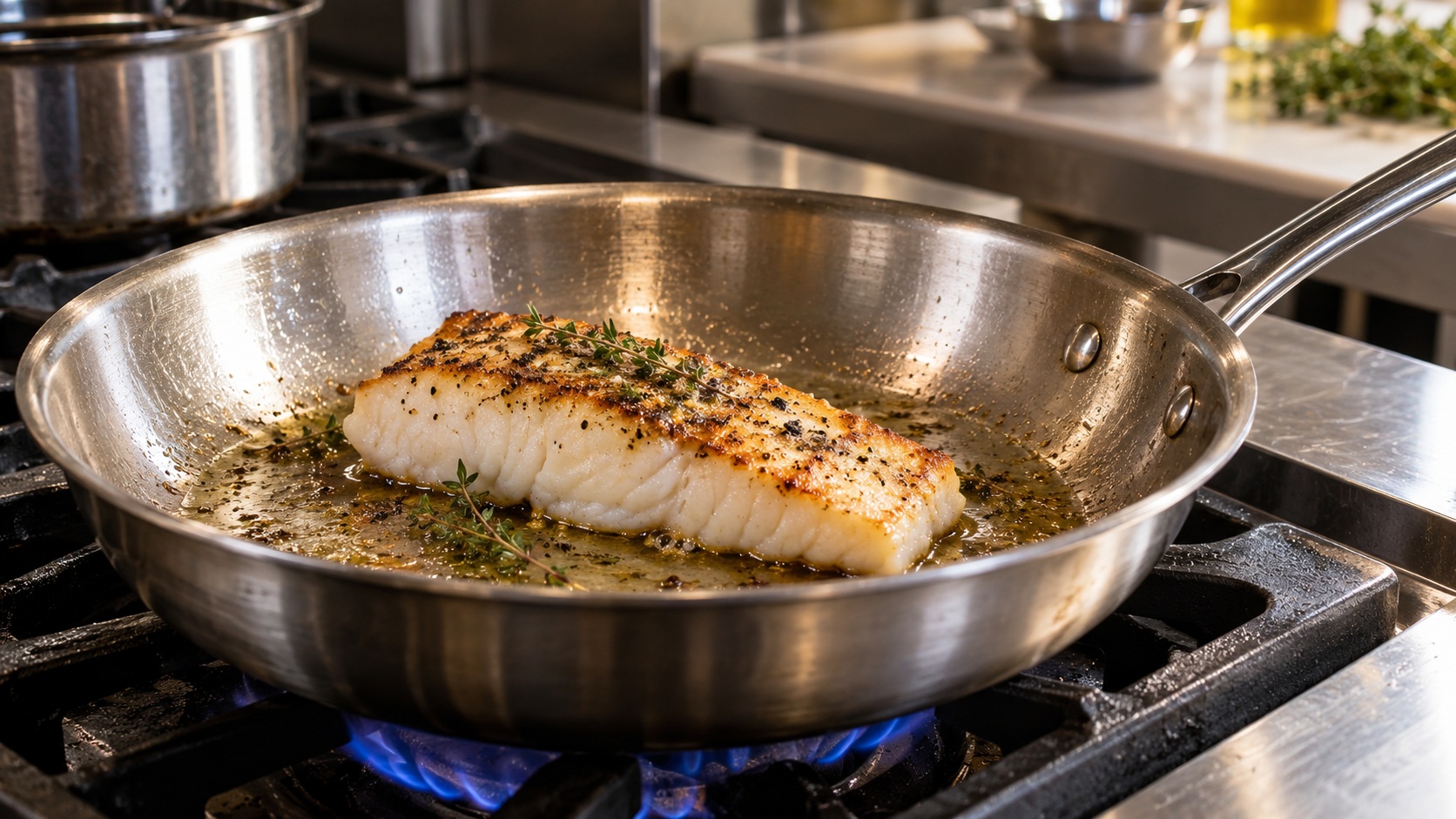
Virtually every commercial kitchen is stocked with stainless steel cookware, and the reason comes down to one word. Reliability. Carlye Lester, sous chef at HAGS, a queer fine dining restaurant in New York City, says stainless steel gets super hot and heats evenly, which makes it easy to put a good sear on whatever’s cooking. At HAGS, Lester uses these pans to sear and crisp a mustard-marinated cod.
Lester also points out that steel can be more dependable than nonstick, as long as you use the right methods. That’s a bold claim for a pan with no slick coating, but the technique behind it is pretty simple.
Quality stainless steel has a few other perks that make it a natural fit for busy kitchens. It’s nonporous, and it won’t react with acidic ingredients like tomatoes or wine. There’s no coating to scratch, either, so you can whisk as hard as you like in a saucepan and grab metal spatulas and tools without worry. Construction matters, too. Look for at least 3-ply, and 5-ply is the recommended pick if you plan to use the pan in the oven or at high heat.
Heat First, Then Oil
One of the biggest myths about stainless steel is that it can’t be nonstick. In reality, a pan heated to the right temperature and given a bit of oil can act a lot like one. The sweet spot sits around 400 degrees Fahrenheit.
No thermometer? Try the water test. Flick a few drops of water into the dry pan. If they evaporate right away, give it more time. Once the droplets start beading up instead of disappearing, the pan is ready. Remove any remaining test water before adding oil; never add water to hot oil. The slick surface you get from there comes down to something called the Leidenfrost effect.
So let the steel come up to temperature before anything else goes in. Adding oil and food to a pan that isn’t hot enough yet means you miss out on that nonstick effect.
Easy Habits That Keep a Pan Going for Decades
Stainless steel doesn’t ask for much after dinner. Let the pan cool down before you wash it. Then dry it with a microfiber cloth so water spots don’t form on the surface. That’s about it.
Those small habits add up. Lester notes that steel has the potential to last for decades when it’s cared for correctly, which becomes a pretty appealing idea as the cost of living keeps climbing. Nonstick pans have a different track record. Many home cooks complain that the slippery coating loses its effectiveness over time, and once it goes, so does the main reason they bought the pan.
The market seems to have noticed. Even social media favorite brands that once pushed ceramic nonstick now offer titanium and stainless steel collections. Lester sees the shift as part of a new era of cooking, one where people are less interested in shortcuts.
Let the Pan Teach You
Plenty of new cooks assume stainless steel is hard to use. Lester sees it differently. Treated right, the pan can become a great cooking teacher on its own, and the water test is a good first lesson in reading when it’s ready.
If you get stuck, help is easy to find. Countless YouTube videos, TikToks and Reels walk through the basics, and Lester says chefs are always happy to pick up the phone and talk a friend through it.
So start small. Preheat a pan, run the water test, add a little oil and sear something simple. Let it cool, wash it and dry it with a microfiber cloth. Lester describes stainless steel as a pan that asks for your attention and intuition, and calls that a favorite way to cook. Give it a few tries and you may feel the same.